

Hosting a Sensory-Friendly Bout
In 2025, Rocky Mountain Roller Derby held our first Sensory–Friendly Bout. The event was inspired by a league member, Showtime, who had a wish that — even once — a bout met the needs of neurodivergent skaters. Showtime shared with us a list of sensory needs that derby does not usually meet and from there, we hatched a plan!
Our goal: To create a unique roller derby event that takes into consideration sensory profiles of neurodivergent folks and embraces the spectrum of those experiences.
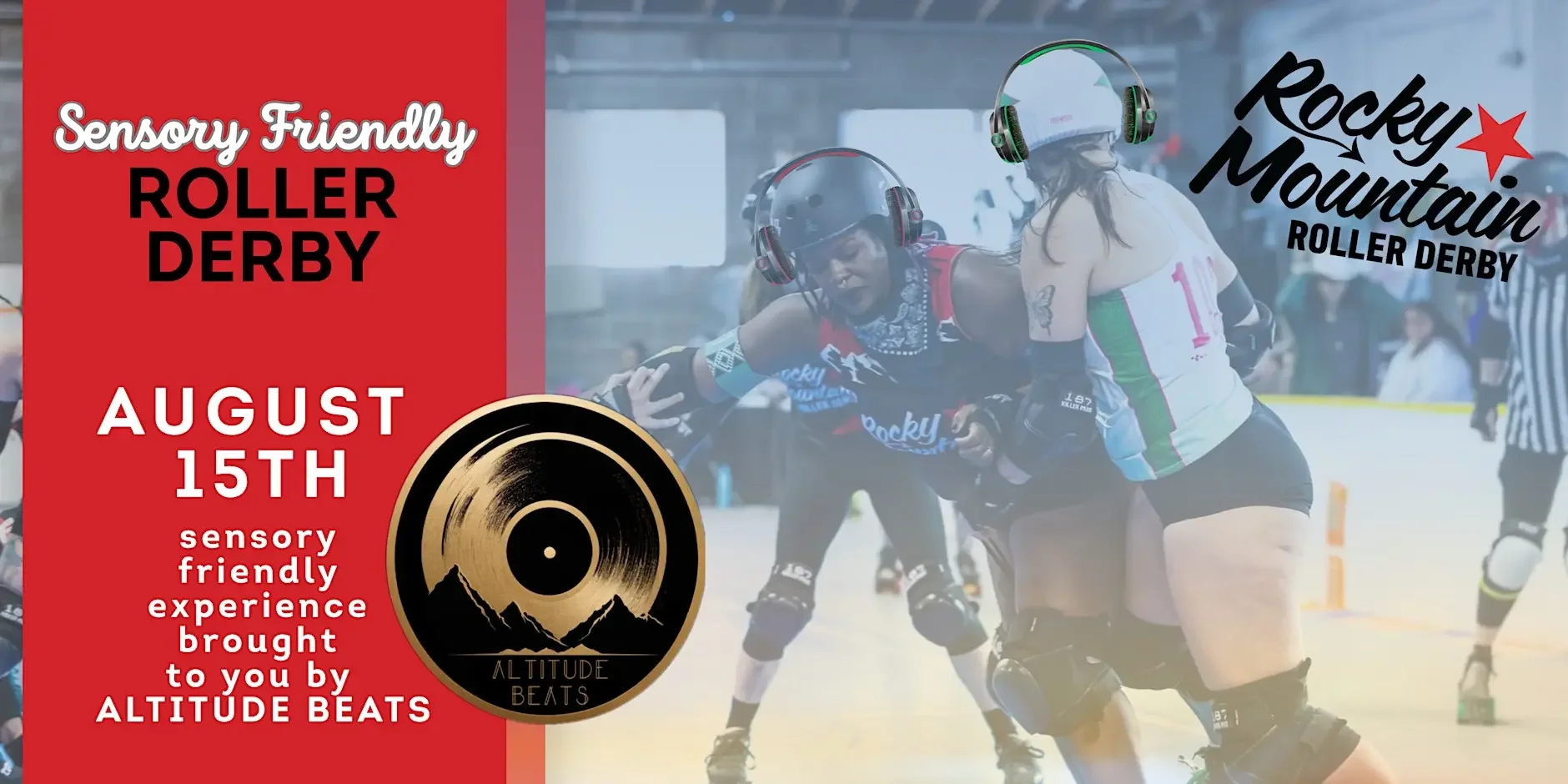
NEXT SENSORY FRIENDLY GAME:
SATURDAY, AUGUST 15, 2026
1) Get League Buy-In
Super critical. It wasn't hard to make this happen, but this format requires everyone to modify business as usual.
Spectators were capped to 1/3 of normal. Meaning less income from ticket sales, this required financial/BOD approval.
2) Establish a Task Force
Include a variety of neurodiverse skaters to weigh in on language and execution, wants and needs, and how to best serve a spectrum of experiences.
This crew made a list of all the things they wish they could change in derby.
We endeavored to do as many as possible within safety limitations.
We found it helped tremendously to have someone who enjoys organization to help with accountability.
3) Set a Goal, Establish Guidelines and Agreements
What’s your why? See our goal at the top of this page
Everyone involved had to sign the guidelines and agreements virtually beforehand. Here's ours:
I understand that as a participant (skater, official, spectator, volunteer, vendor, etc.) of this event I will comply with the following requests and agreements
Regulate our voices & use visual applause
Be open-minded about behaviors and needs that are different than your own
Respect and give space, ask for consent, do not assume intent
The guidelines were also posted around the venue during the event
4) Modified Bout Set Up
No overhead fluorescent lights (held the event during the day)
No announcing over speakers
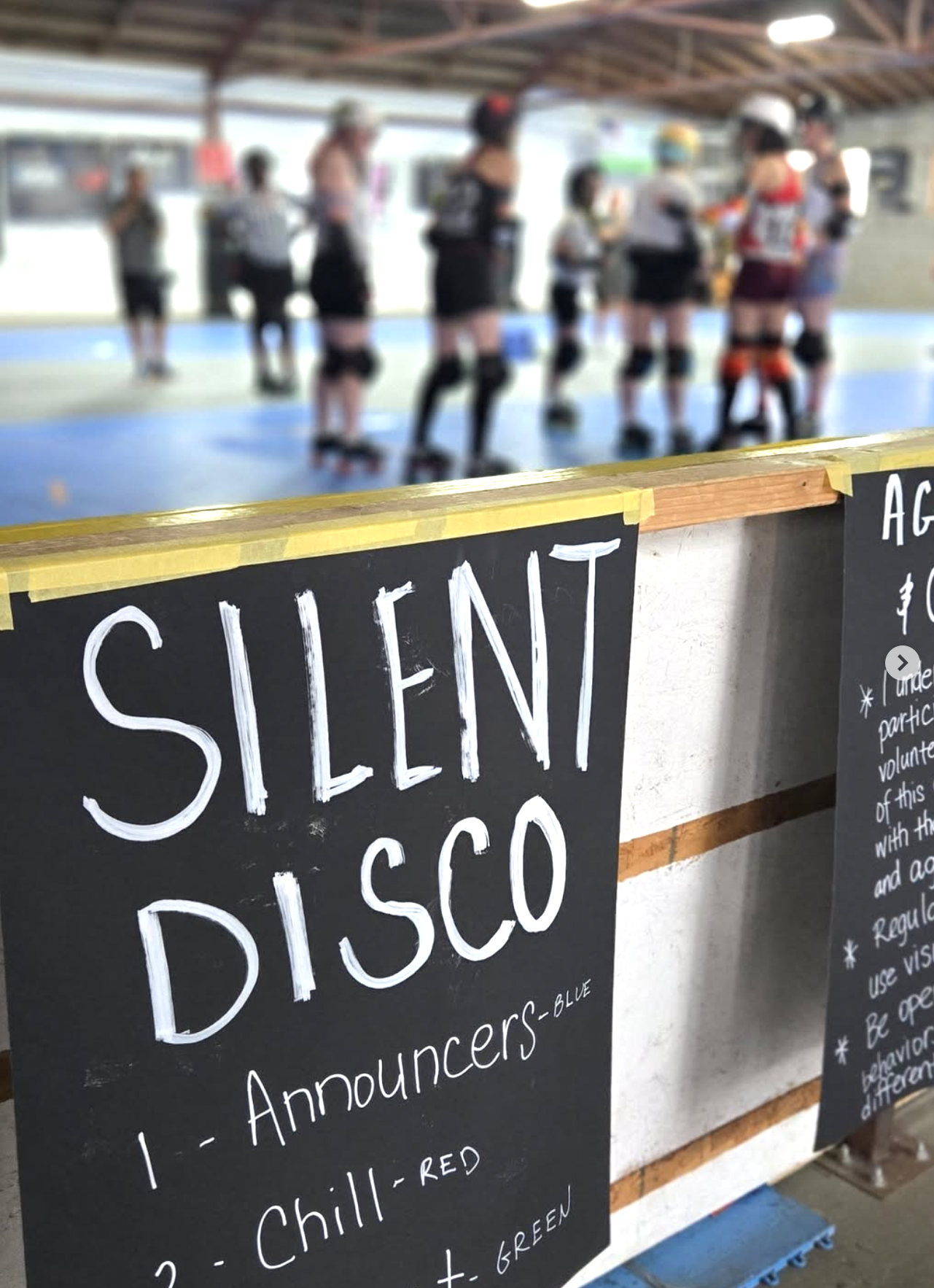
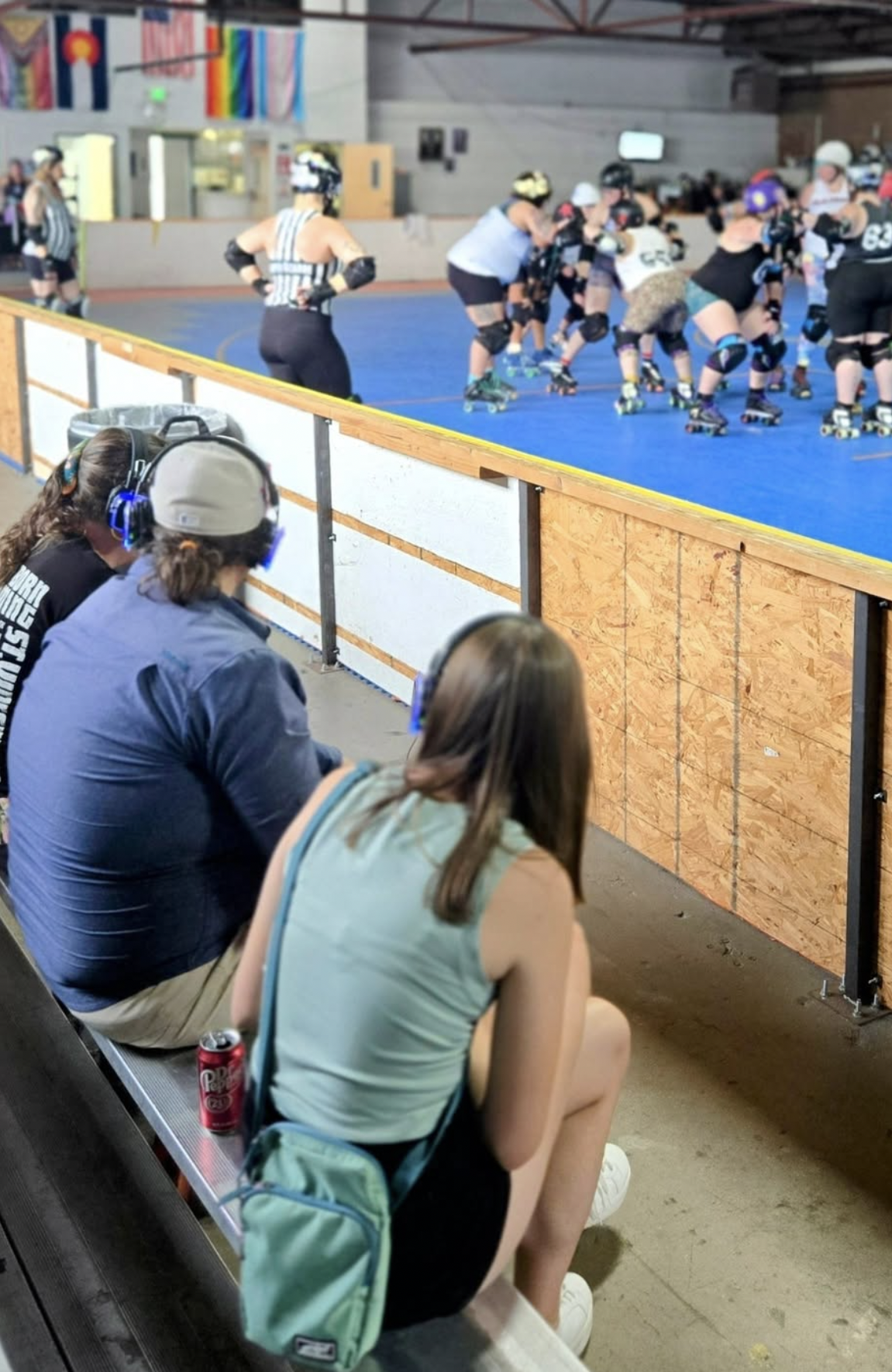
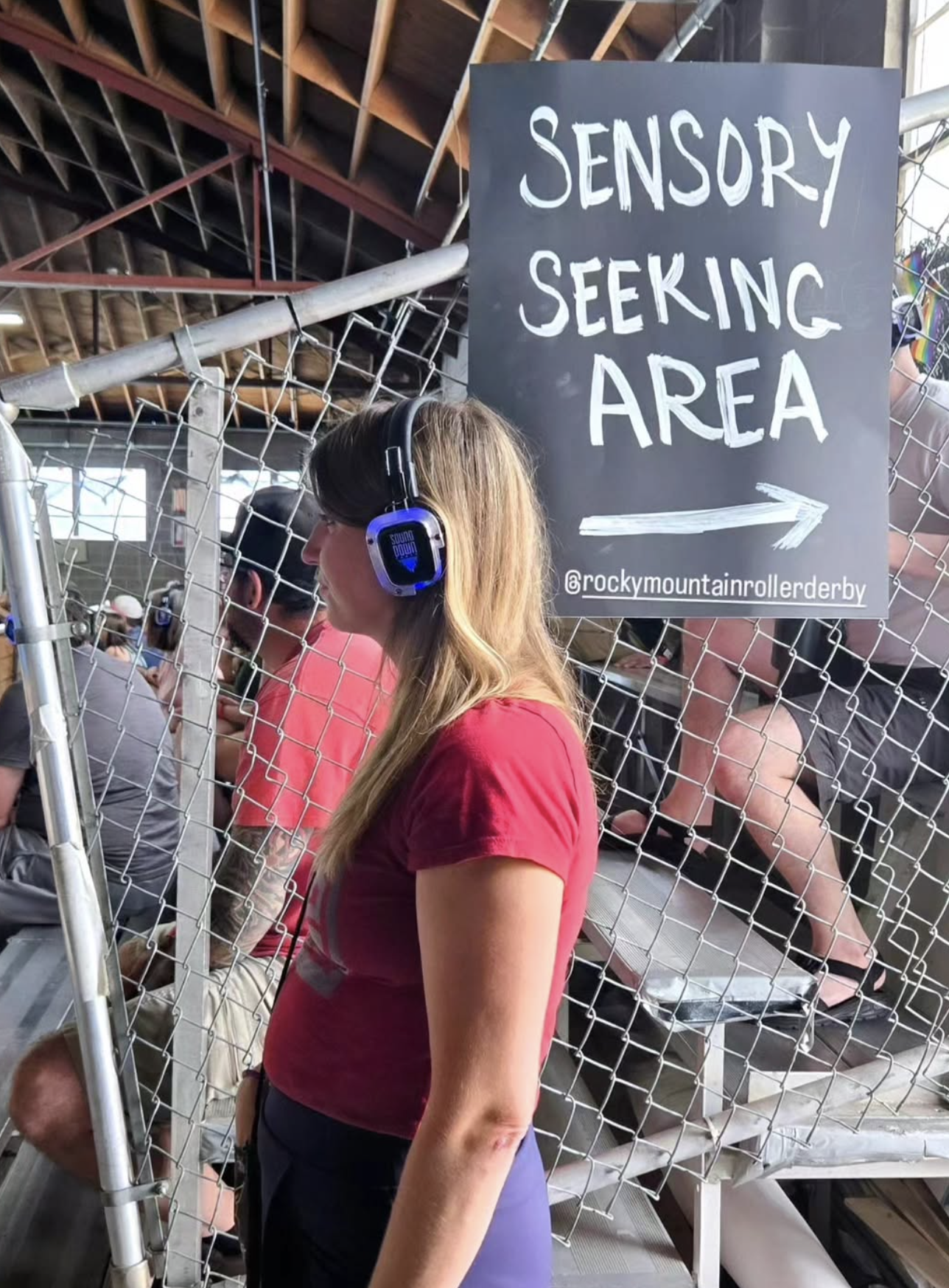
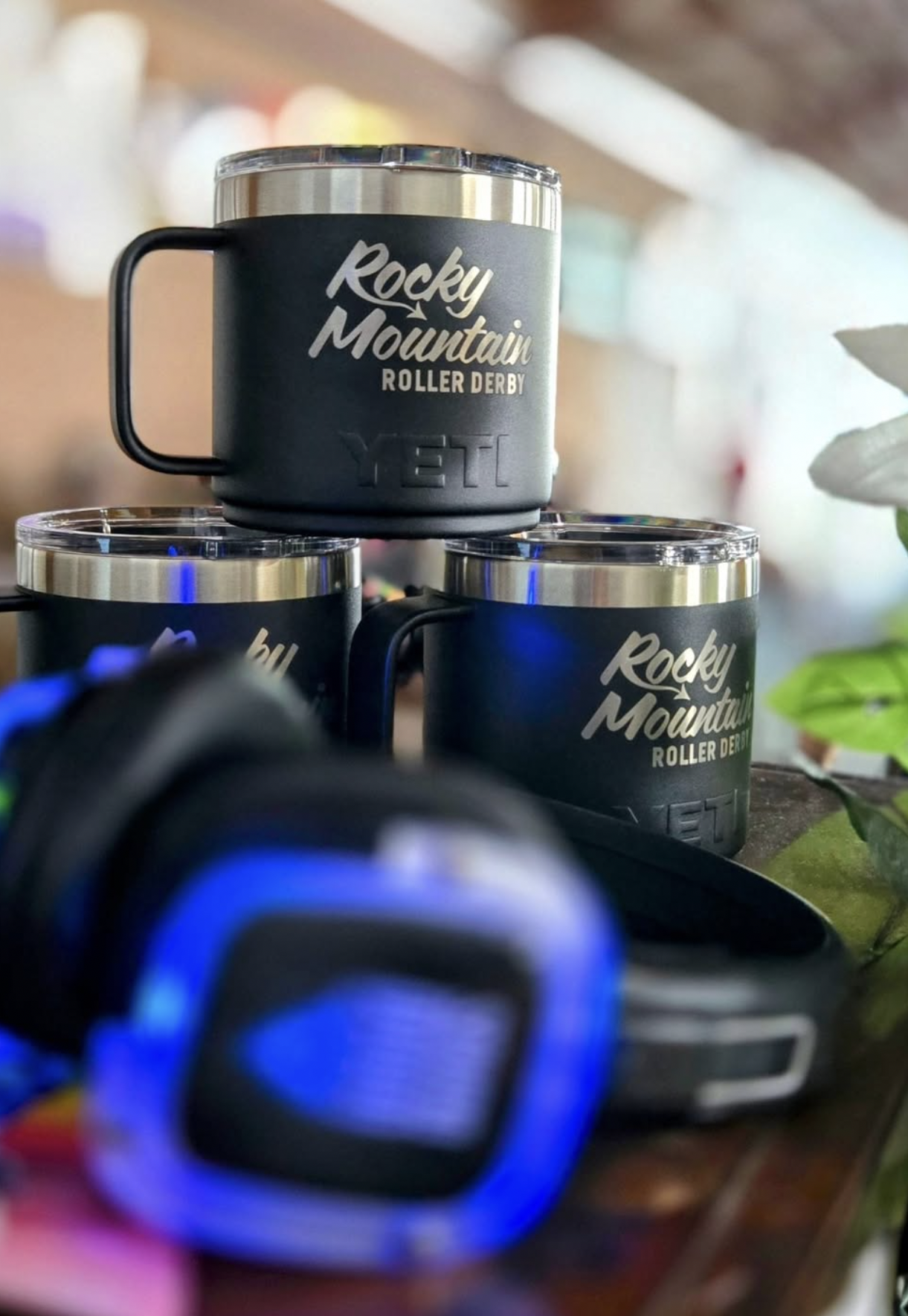
Instead we had a local "Silent Disco" company provide headphones
The headphones had three channels: announcers, chill music, upbeat dance music
Headphones were available as an optional donation with ticket purchase online and at the door
Sensory seeking area outside with games, chalk, hula hoops, bubbles, etc.
Separate quiet area with no lights, chairs to sit in
Buckets of fidget toys around the venue
Ear plugs available for free at door
Extra chairs and room on benches for people who need additional personal space
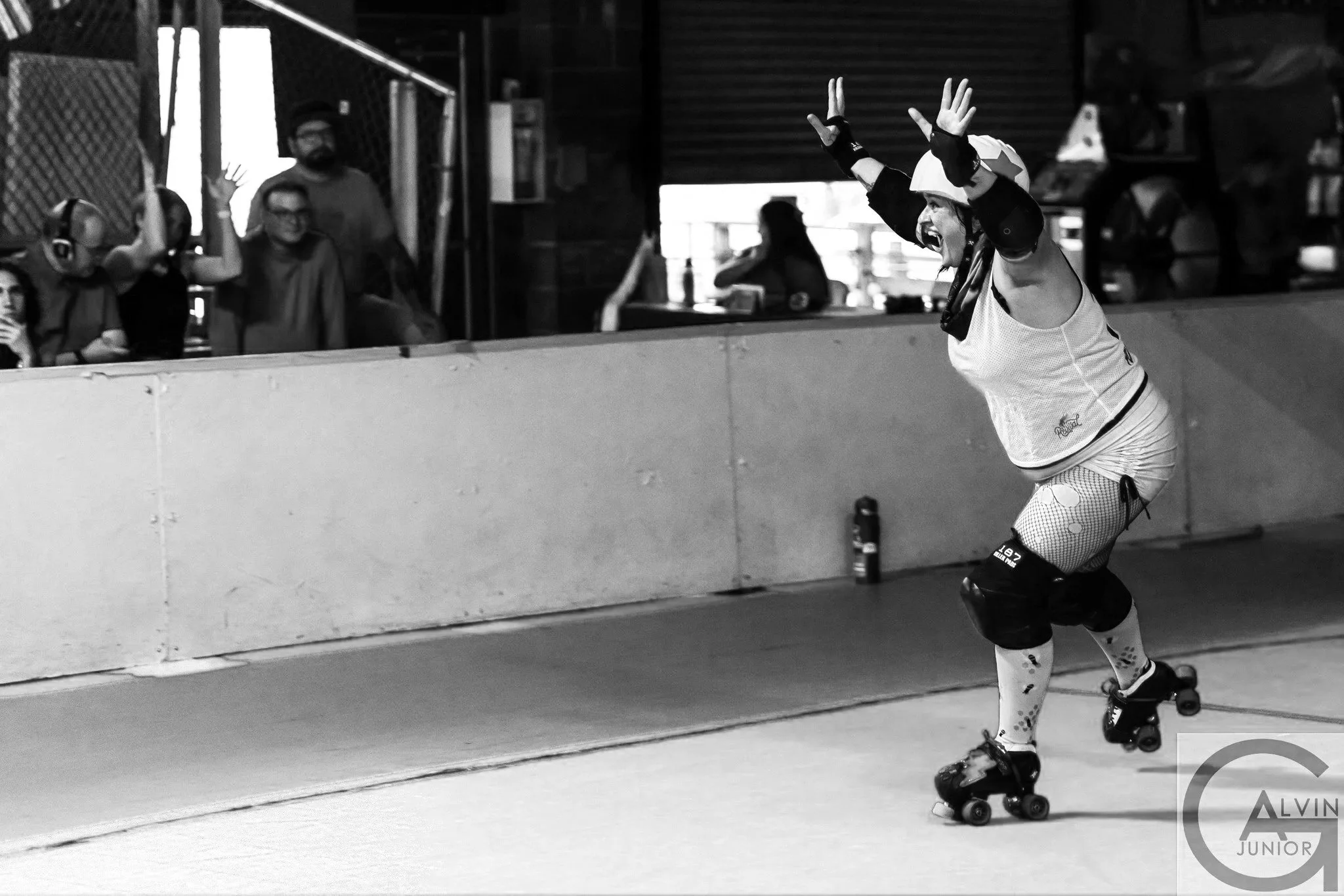
No cheering! We had signs encouraging visual applause and provided ribbon wands in team colors
Additional signage for more clarity/not having to ask where things were
Limited tickets sold to minimize crowding
For ticketing, we gave people the choice of holding / putting the wristband in their pocket instead of wearing that, knowing that could be a sensory issue for some
5) Modified Officiating
Allow time for processing as you would a HOH skater
Encourage visual cues
Use electronic whistles as much as possible (the sound is less jarring)
6) Rosters
Depending upon interest, roster priority is given to skaters who self-identify as neurodivergent
Our task force created a form for skaters to share strengths, weaknesses, requests, and preferences and we built the rosters based on this information, then shared the answers with the teams
Benches were quiet (no yelling, visual applause), communication on the track was also measured
7) Community Involvement
This one is more a wish list for our next event.
Involve Divergence Derby and support their mission (we did reach out to them, but the timing did not work in 2025)
Engage organizations that align with the goal of the event either as vendors, for free tabling, or to receive a portion of proceeds
All photos courtesy of Peter Huong